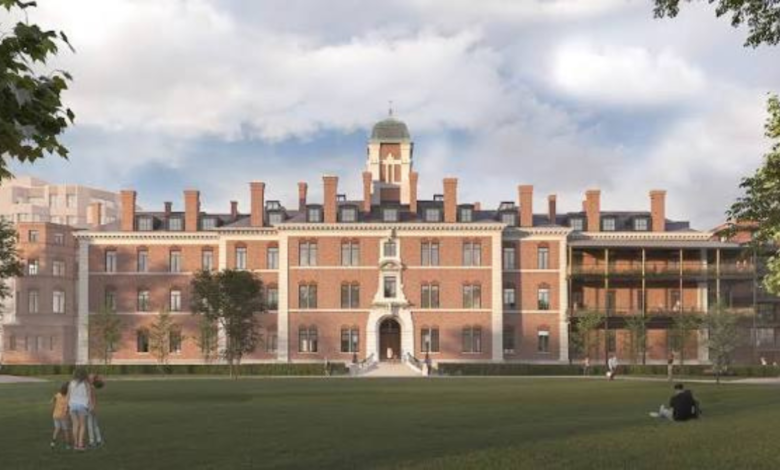
The London Chest Hospital was one of the United Kingdom’s most respected specialist hospitals, earning an outstanding reputation for treating heart and lung diseases. Located in Bethnal Green, East London, the hospital served generations of patients with expert medical care and innovative treatments. Its Victorian architecture, medical achievements, and long-standing connection with the local community have made it an important part of London’s healthcare heritage.
Although the London Chest Hospital officially closed its doors in 2015, interest in its history continues to grow. Many people search for information about its medical services, redevelopment, famous consultants, and historic buildings. Whether you are researching its remarkable past or simply curious about the transformation of the former site, this guide explores every important aspect of this iconic institution.
The History of London Chest Hospital
The origins of the London Chest Hospital date back to the nineteenth century, when respiratory illnesses such as tuberculosis presented major public health challenges. The hospital was founded to provide specialist treatment for diseases affecting the lungs and chest, quickly establishing itself as an important centre for medical excellence. As demand for specialist care increased, the hospital expanded both its facilities and its range of healthcare services.
Over the following decades, the hospital adapted to advances in medical science and became internationally recognised for treating both respiratory and cardiac conditions. Surgeons, physicians, nurses, and researchers worked together to introduce new techniques that improved patient outcomes. The hospital’s contribution to modern medicine helped strengthen its reputation as one of Britain’s leading specialist healthcare institutions.
London Chest Hospital Bethnal Green
Situated on Bonner Road beside Victoria Park, the London Chest Hospital occupied an excellent location within Bethnal Green. Its position allowed patients from across East London and beyond to access specialist healthcare with relative ease. The surrounding neighbourhood developed alongside the hospital, creating a strong relationship between the medical centre and the local community over many generations.
Transport links made visiting the hospital convenient for patients, staff, and visitors alike. Several bus routes served the area, while nearby railway and Underground stations provided easy connections from different parts of London. Even after the hospital’s closure, Bethnal Green continues to attract visitors interested in exploring the historic buildings and learning about the site’s remarkable contribution to healthcare.
Medical Services and Specialist Reputation
The London Chest Hospital became widely recognised for providing exceptional care to patients suffering from heart and lung conditions. It developed specialist departments dedicated to respiratory medicine, cardiology, cardiac surgery, and related fields, attracting patients from across the United Kingdom. Its commitment to medical excellence ensured that the hospital remained at the forefront of healthcare innovation for many decades, helping thousands of individuals receive life-saving treatment.
A team of highly experienced consultants, surgeons, nurses, and healthcare professionals worked together to deliver outstanding patient care. The London Chest Hospital consultants gained an excellent reputation for their expertise, research, and clinical achievements. Many pioneering surgical procedures and medical techniques were introduced within its walls, strengthening the hospital’s position as one of Britain’s most respected specialist centres for chest and cardiovascular medicine.
Why the London Chest Hospital Closed
Despite its outstanding reputation, changes within the National Health Service eventually led to the closure of the hospital. Healthcare services across London were reorganised to improve efficiency, allowing specialist teams and advanced medical equipment to be brought together within larger hospitals. This strategic decision aimed to provide patients with access to more comprehensive treatment under one healthcare network.
The London Chest Hospital officially closed in April 2015 after serving patients for more than 160 years. While many former staff members, patients, and local residents were saddened by the decision, specialist services continued at other hospitals managed by Barts Health NHS Trust. The closure marked the end of an important chapter in London’s medical history, but the hospital’s legacy continues through the expertise and services transferred elsewhere.
London Chest Hospital Redevelopment
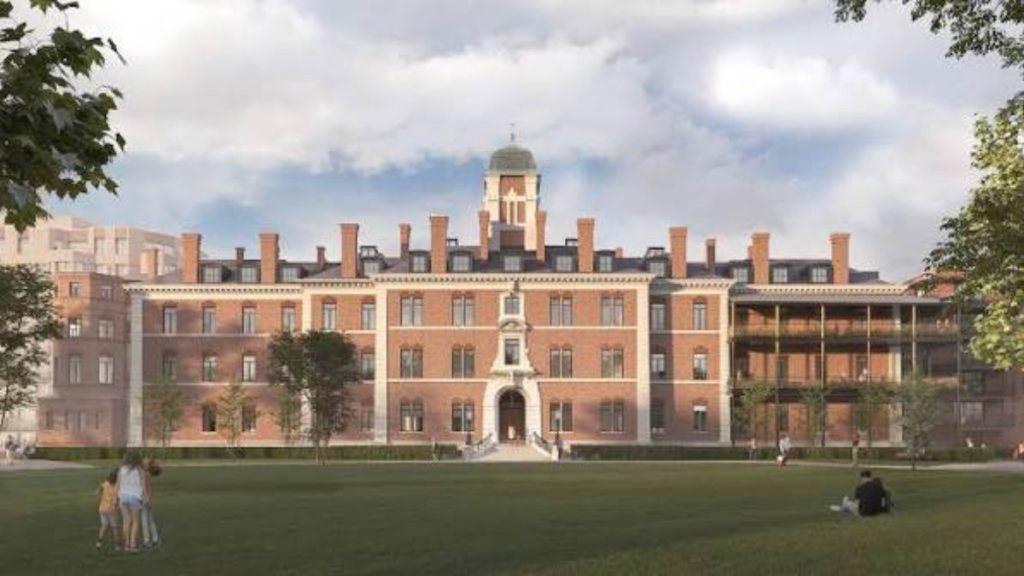
Following the closure, attention quickly shifted towards the future of the historic site. Plans for the London Chest Hospital redevelopment focused on preserving its architectural heritage while creating a modern residential community. Developers worked closely with planning authorities to ensure that significant Victorian buildings remained protected, allowing the site’s historical character to be retained alongside carefully designed new homes.
The London Chest Hospital development has transformed the former medical campus into an attractive neighbourhood featuring contemporary housing, landscaped gardens, and improved public spaces. Crest Nicholson London Chest Hospital redevelopment has played a key role in shaping the project, blending heritage conservation with sustainable urban living. The redevelopment demonstrates how historic sites can be successfully adapted for modern communities without losing their cultural significance.
Visiting the Former London Chest Hospital
Although the hospital no longer functions as a medical facility, the former London Chest Hospital continues to attract historians, architecture enthusiasts, and local visitors. Many people visit the surrounding area to appreciate the preserved Victorian buildings, which remain a striking reminder of the hospital’s long and distinguished history. The impressive design reflects the architectural style commonly seen in specialist hospitals during the nineteenth century.
Visitors also show interest in the famous London Chest Hospital mulberry tree, which has been carefully preserved as part of the redevelopment project. Historical archives and online collections feature numerous London Chest Hospital photos that document the hospital’s evolution over the decades. These photographs provide a fascinating insight into daily hospital life, changing medical practices, and the remarkable transformation of the site following its closure.
The Legacy of the London Chest Hospital
The London Chest Hospital remains an important part of Britain’s medical history, even though it no longer operates as a healthcare facility. For more than a century and a half, it provided specialist treatment for thousands of patients while contributing to significant advances in cardiac and respiratory medicine. Its influence extended beyond East London, helping to shape clinical practices that benefited hospitals throughout the United Kingdom.
Today, the hospital’s legacy lives on through the healthcare professionals who trained there, the medical research it supported, and the historic buildings that continue to stand. The preservation of key architectural features ensures future generations can appreciate the role the hospital played in improving healthcare. For local residents and medical historians alike, the former London Chest Hospital remains a symbol of dedication, innovation, and compassionate patient care.
Conclusion
The London Chest Hospital was far more than a specialist medical institution. It became a centre of excellence where groundbreaking treatments, expert consultants, and dedicated healthcare staff worked together to improve the lives of countless patients. From its Victorian beginnings to its final years under Barts Health NHS Trust, the hospital built a remarkable reputation that continues to be recognised today.
Although the site has been transformed through redevelopment, its historical importance has not been forgotten. The preserved buildings, carefully planned residential community, and lasting medical legacy ensure that the story of the London Chest Hospital continues to inspire interest. Whether you are researching its fascinating past or exploring Bethnal Green’s heritage, the hospital remains one of London’s most significant healthcare landmarks.
Frequently Asked Questions
When did the London Chest Hospital close?
The London Chest Hospital officially closed in April 2015.
Where was the London Chest Hospital located?
It was located on Bonner Road, Bethnal Green, London E2 9JX.
Why did the London Chest Hospital close?
It closed after NHS services were transferred to other specialist hospitals.
What was the London Chest Hospital famous for?
It was renowned for its specialist treatment of heart and lung diseases.
Who managed the London Chest Hospital?
The hospital was managed by Barts Health NHS Trust before its closure.
What is on the former London Chest Hospital site now?
The site is being redeveloped into a residential community with preserved historic buildings.
Who is developing the London Chest Hospital site?
The redevelopment is being carried out by Crest Nicholson and its development partners.
Can you visit the former London Chest Hospital?
Yes, you can view the exterior and surrounding area, although it no longer operates as a hospital.
Is the London Chest Hospital mulberry tree still there?
Yes, the historic mulberry tree has been preserved as part of the redevelopment.
Are historical photos of the London Chest Hospital available?
Yes, historical photos are available through archives, heritage websites, and online collections.
Was parking available at the London Chest Hospital?
Yes, limited parking was available when the hospital was operational.
What medical services did the London Chest Hospital provide?
It specialised in cardiology, cardiac surgery, respiratory medicine, and chest disease treatment.
Also Read: british forests